
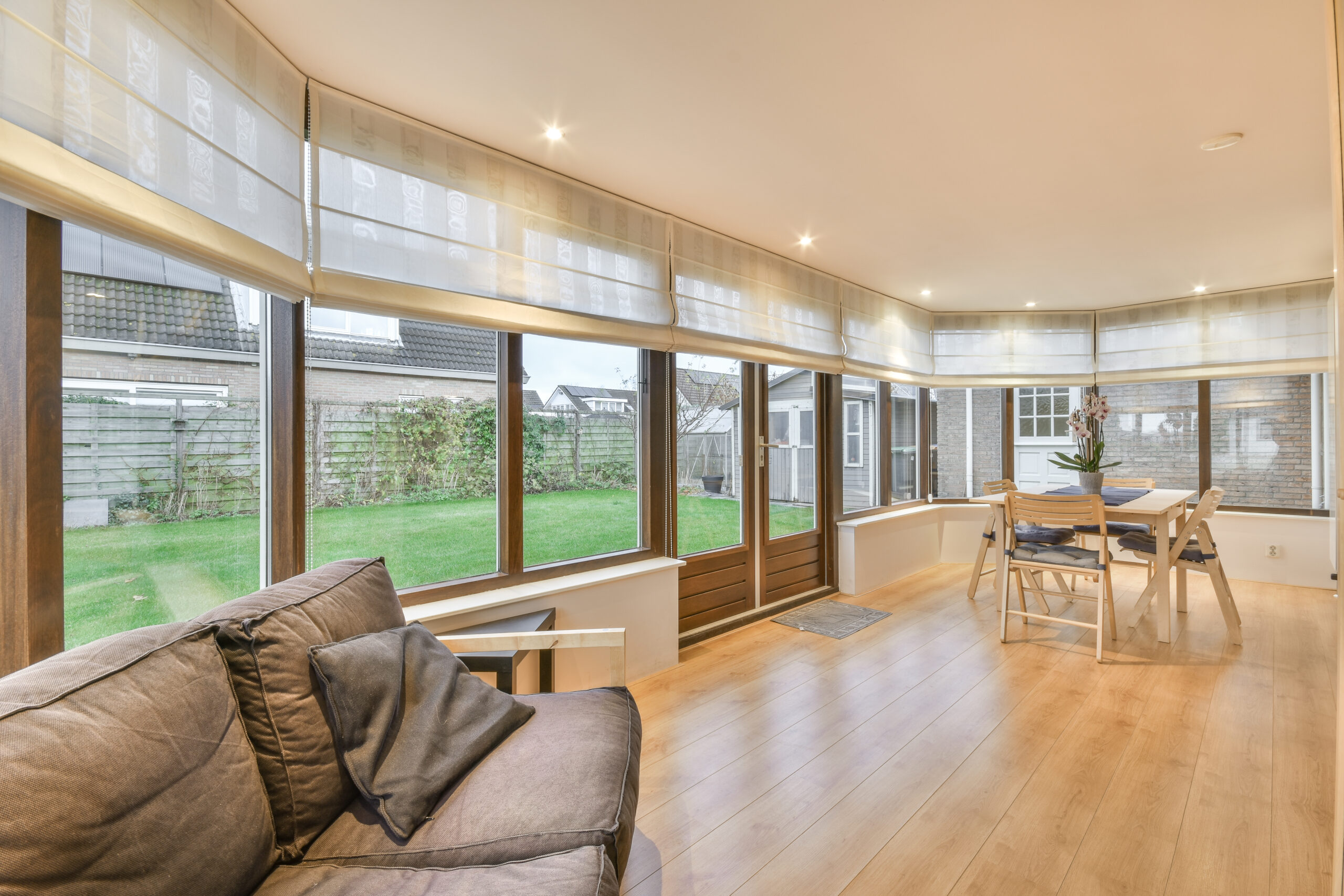
Natural light can completely change the look and feel of a room, making it brighter, more spacious and more inviting. But when a window gets strong sunlight for several hours a day, it can also bring glare, excess heat, and privacy issues. Over time, direct sunlight can also contribute to fading on furniture, flooring and soft furnishings.
The best blind for a sunny room depends on which of those problems you’re trying to solve. A south-facing living room that gets uncomfortably warm needs a different approach than a home office where screen glare is the main problem. A bedroom might need stronger light control, while a ground-floor room may need privacy without losing daylight.
For this reason, we look beyond whether a room is sunny. The window’s direction, the size of the glazing, and how you use the room all affect which type of shading works best.
What’s the Main Problem With Sunlight?
Before choosing a blind, consider what’s making the room uncomfortable. Strong sunlight can create different issues, and each one requires a slightly different approach.
If glare is the main issue, particularly around televisions or computer screens, you might need a blind that lets you adjust the amount of light throughout the day. If privacy is the concern, the priority may be limiting views into the room while still allowing daylight inside. Heat is slightly different. Large glazed areas let significant solar heat into a room, particularly when they face south or west. Once that heat passes through the glass, an internal blind can help manage comfort, but it can’t stop the heat the same way external shading can.
Direct sunlight can also affect the room and interior. Strong UV exposure over time can contribute to fading, so limiting direct sunlight on flooring or furniture can also be part of the decision. This is why the consultation process is so important. With a range of blinds available, the right choice shouldn’t just cover the window; it should improve how the room works.
Are Blackout Blinds Best for Sunny Rooms?
Blackout blinds are sometimes the first solution homeowners consider for strong sunlight, but they’re not always the best option. Blackout fabric can be very useful when you want to minimise incoming light, particularly in bedrooms, nurseries or rooms used for sleeping during the day. However, choosing blackout fabric doesn’t automatically make a room completely dark.
How dark the room becomes depends on the whole blind system, not just the fabric. The way the blind fits, the amount of light that enters around the edges and whether features such as side channels are used can all affect the final result. This is important if darkness is your priority.
For a living room or home office, blackouts can also be more than you need. If the goal is simply to reduce glare or make strong sunshine easier to manage, an adjustable blind can help you control the light without making the room unnecessarily dark.
Which Blinds Can Help With Heat?
Internal blinds can make a sunny room more comfortable, but it’s worth considering their limitations. Once sunlight passes through the glazing and turns into heat inside the home, an internal blind can only do so much. Duette blinds can be a useful internal option. Their honeycomb design creates air pockets within the blind, helping to improve insulation. This can make them worth considering when both light control and thermal performance matter.
However, if overheating is the main problem, external shading might be more effective. External zip blinds can intercept sunlight before it passes through the glass. That can be particularly useful on large areas of south- or west-facing glazing where a room becomes noticeably hotter during sunny weather.
This doesn’t mean every bright room needs an external blind. For many homes, an internal blind provides the comfort you need. The difference is understanding whether you are mainly managing brightness or trying to reduce significant heat gain.
How Can You Balance Privacy and Natural Light?
Privacy is often more complicated than simply opening or closing a blind. Roller and Roman blinds, for example, can be stopped at different heights, so you can control how much of the window is covered. However, the covered part of the window blocks the view and daylight.
If you want more privacy while keeping natural light in the room, there are other options to consider. Shutters use adjustable louvres, which let you change the angle of the slats to restrict views into the room without closing it off completely. Venetian blinds work in a similar way. Their adjustable slats can be tilted to control the line of sight while still allowing daylight through, which can be useful in ground-floor rooms or windows facing neighbouring properties.
Vision blinds offer another approach. They use alternating sheer and solid fabric bands, so you can adjust how much light enters while also changing the level of privacy. For some rooms, the goal isn’t complete privacy or complete darkness, but finding the right balance between daylight, glare, and how exposed the room feels.
Do Large Sunny Windows Need Electric Blinds?
Not always. Large windows are often where homeowners start considering electric blinds, but glazing size alone shouldn’t drive the decision. Motorisation can be particularly useful in rooms where the sunlight changes noticeably throughout the day. If a window gets strong sun for several hours, being able to adjust the blinds quickly makes it easier to respond as the light moves across the room. This can help in home offices, living rooms, or glazed extensions where glare is only a problem at certain times.
Electric blinds can also make sense where several blinds need to move together rather than being adjusted one at a time. However, that doesn’t mean every sunny room needs motorisation. If the blind is easy to reach and you rarely change its position, manual operation may be practical. Electric operation is most useful when it makes regular light control simpler.
Can Blinds Help Protect Furniture From Fading?
Blinds can reduce the amount of direct sunlight reaching the inside of your home, which may help prevent fading over time. The amount of protection depends on how much direct sun reaches the room and how you use the blind. A blind that stays fully open during the strongest part of the day offers little protection, while regularly shading the room when direct sunlight hits surfaces can make a difference.
It’s also worth remembering that the best solution might not be to keep a room dark all day. If fading is a concern, we can look at when the strongest sunlight reaches the room and choose a blind that gives you enough control to protect your interior design without unnecessarily losing the natural light you enjoy.
Choosing the Right Blinds for Sunny Rooms
For a sunny room, the best blind is the one that solves the specific issues you’re experiencing and provides the control you need. Blackout blinds can provide strong light reduction, but the level of darkness depends on the blind’s fit and fabric. Duette blinds can help with insulation, shutters provide adjustable privacy, and external blinds can be particularly useful where excessive solar heat is the main problem.
Different products solve different problems, which is why it helps to look at the room as a whole rather than choosing on appearance alone. At Cambridge Blinds, we have been working with homes across Cambridgeshire since 2000, so we know that two rooms with similar glazing can still need very different approaches.
If you’re unsure which option would suit your home, you can book a home survey with us. We’ll look at how the sunlight reaches the room, the size and position of the glazing, and what you want the blind to achieve day to day. From there, we can talk you through the options that make sense for the space, whether that’s an internal blind, shutters or external shading.