
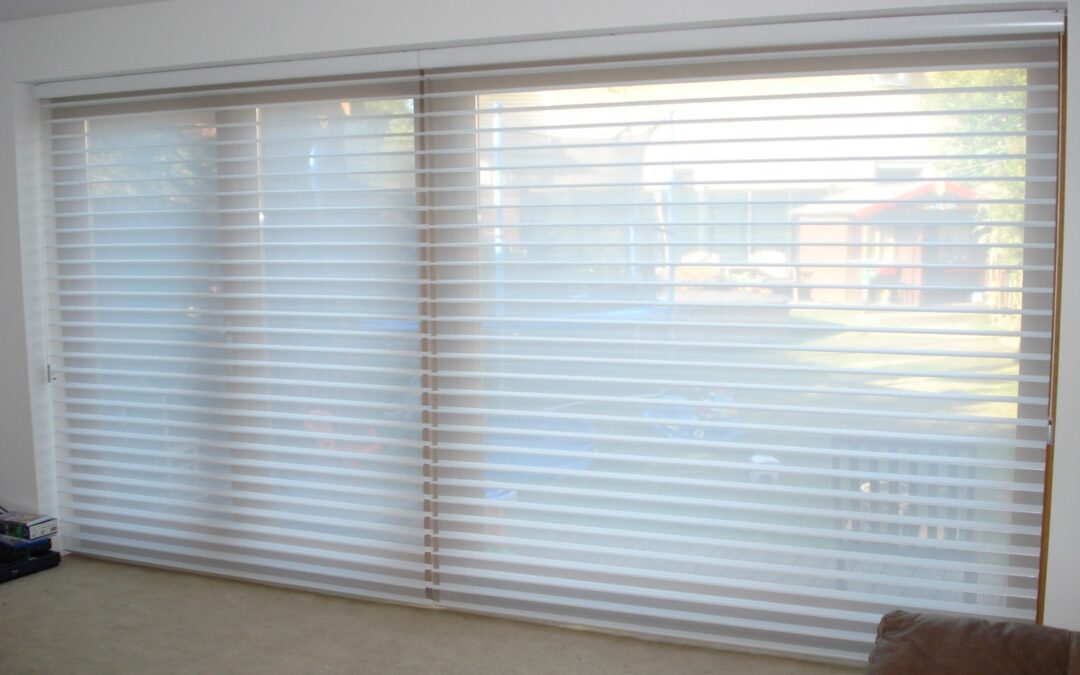
Large windows can instantly make a room feel brighter and more open. Yet they can also create practical challenges when it comes to controlling sunlight, glare, and privacy. For this reason, many homeowners consider installing automated blinds for bigger areas of glazing.
However, size alone doesn’t mean a blind needs to be motorised. When we recommend blinds for windows, at Cambridge Blinds we consider how easy the blind is to reach, how often it will be adjusted, whether several blinds need to move together, and how the room is actually used.
A large blind at normal height might still be simple to operate manually, whereas several blinds positioned high above a glazed extension are very different. Our aim is to recommend the right level of control for the room, without adding smart features you’re unlikely to benefit from.
Can You Reach the Blind Easily?
Accessibility is one of the most obvious reasons to consider automation. A large window at normal height might be easy to reach, making the blind easy to operate manually.
The situation changes when glazing sits out of normal reach. Skylights, high-level glazing and windows above staircases can all make manual operation awkward. Modern extensions are a good example, particularly where homeowners have added tall or vaulted glazing to bring more natural light into the room.
If adjusting the blind means using a pole or you just leave it in one position because it’s inconvenient to change, electric blinds can make everyday use much easier. In these situations, remote operation solves a practical problem rather than simply adding another feature.
Large Does Not Automatically Mean Motorised
Dimensions matter, but size alone should not make the decision. Depending on the blind type, fabric, dimensions and operating system, a large manual blind may remain perfectly practical. Conversely, weight and repeated operation can make motorisation genuinely worthwhile.
Sometimes dividing one very large opening into two or more blinds gives better control than trying to manufacture one enormous blind. Separate blinds can also shade different parts of the glazing independently.
How Often Will You Use the Blind?
How you use the room can be just as important as the window’s position. For instance, you might only adjust a blind in a spare bedroom occasionally. So, even if the window is large, you might not need to automate it.
An open-plan kitchen or living space is different. If sunlight moves across the room throughout the day, you might find yourself regularly changing the blinds to control glare or make the space more comfortable. Home offices are another good example. If direct afternoon sunlight reaches your screen, being able to adjust the blind quickly can make a noticeable difference.
Frequency matters because a feature that saves effort several times a day might be worthwhile, whereas the same feature on a blind that barely moves could be an unnecessary cost.
Are You Operating Several Blinds Together?
The number of blinds in a room can also influence whether automation is useful. Opening one blind manually is usually straightforward, but opening six separate blinds across a large glazed extension every morning and then closing them again later can become more of a task.
This is where automated blinds can be particularly practical. Depending on the system, you can group several blinds, so they move together, while still allowing individual control when needed. For homeowners with open-plan extensions where roof glazing, side windows and large doors all need shading, this can be very useful.
It doesn’t mean every blind in the house needs to be connected to the same system. We can recommend smart blinds where they genuinely improve day-to-day use while installing simpler manual blinds elsewhere.
Rechargeable Battery, Mains or Transformer Powered?
If motorised blinds make sense, the next question is how they should be powered.
Battery-operated systems can be useful in finished rooms because they provide electric operation without installing new mains wiring. Whereas hardwired systems can make more sense when blinds are being installed as part of a renovation. Planning the wiring before plastering and decorating can provide a neat solution for several regularly used blinds. Solar-powered options can also work particularly well for certain difficult-to-reach windows, where running a new power supply might not be practical.
There isn’t a one-size-fits-all option that we would automatically recommend. Instead, we consider the blinds’ location, how often they will be opened and closed, and what electrical provision already exists before deciding which power source makes the most sense.
Choosing the Power Source
Rechargeable lithium battery motors are often ideal in completed, decorated rooms because they avoid new mains wiring and can be recharged periodically. Battery power is not automatically suitable for every very large blind; motor choice depends on the product’s dimensions and weight.
Mains-powered systems are especially worth considering during a build or renovation. Some systems use low-voltage motors supplied through a suitable transformer or power supply. Planning these arrangements before plastering allows cables and power supplies to be concealed much more neatly.
How Much Automation Do You Actually Need?
Choosing electric blinds doesn’t mean you need every smart feature available. For many homeowners, a straightforward remote control is enough. Others might benefit from controlling several blinds together, using an app on a phone or tablet, or scheduling blinds to move at particular times. The right setup depends on what you will genuinely use.
For example, grouped light control can be helpful in a large extension where several blinds need to move at once, or scheduled operation might suit a room with predictable periods of sunlight. For one blind in a bedroom, these extra controls might offer very little practical advantage.
We would rather keep the system simple where simplicity works.
Do Automated Blinds Need a Smartphone?
No. An automated blind can be as simple as a handheld remote. Depending on the chosen system, other options may include multi-channel remotes, grouped operation, wall controls, app control, scheduled operation and integration with compatible home-automation equipment.
More technology is not automatically better. If one button on a remote does everything you need, keeping the controls simple is often the best answer.
Is it Worth Planning Electric Blinds During an Extension?
If you’re already building an extension, it’s worth discussing blinds before the project is completely finished. This doesn’t mean you need to decide on styles, colours and patterns from the outset, but considering operations can be useful.
Planning ahead lets us consider where blinds will be fitted and whether the project needs electrical wiring. Thinking about power supplies before walls are finished can make hardwired blinds easier to incorporate and avoid visible cables or additional work after decorating.
This is particularly worth considering when a new extension includes several rooflights, floor-to-ceiling glazing or large windows that would be difficult to operate manually. Even if you eventually choose a simpler control system, thinking about it early gives you more options.
Can Automation Help With Solar Heat and Glare?
Yes, particularly where blinds are adjusted repeatedly throughout the day. Automation makes consistent shading easier, rather than leaving several blinds open simply because operating them is inconvenient.
If overheating is the main concern, we may also discuss external shading. Stopping solar energy before it passes through the glass can be more effective than trying to manage heat after it has entered the room.
Choosing Manual or Automated Blinds for Large Windows
Large windows are often where electric blinds provide the most practical benefit, but they’re not automatically essential. At Cambridge Blinds, we look at whether the blind is easy to reach, how often it will be adjusted and whether several blinds need to work together.
For a single accessible window, a manual blind might be the simplest and most cost-effective option. For rooflights or several regularly used blinds across a large extension, automation can make everyday control significantly easier.
We offer a wide range of window covering options because we don’t believe every customer needs the most technical or expensive system available. If a manual blind will do everything you need, we will happily recommend it. If automated blinds provide a real benefit, we can explain why and help you choose the level of control that suits your home and your budget.
If you are planning an extension or have a large area of glazing, contact Cambridge Blinds to discuss whether manual, rechargeable or mains-powered blinds would suit it best. Ideally, speak to us before the electrical and decorating work is finished — a little planning at the beginning can preserve far more options later.