
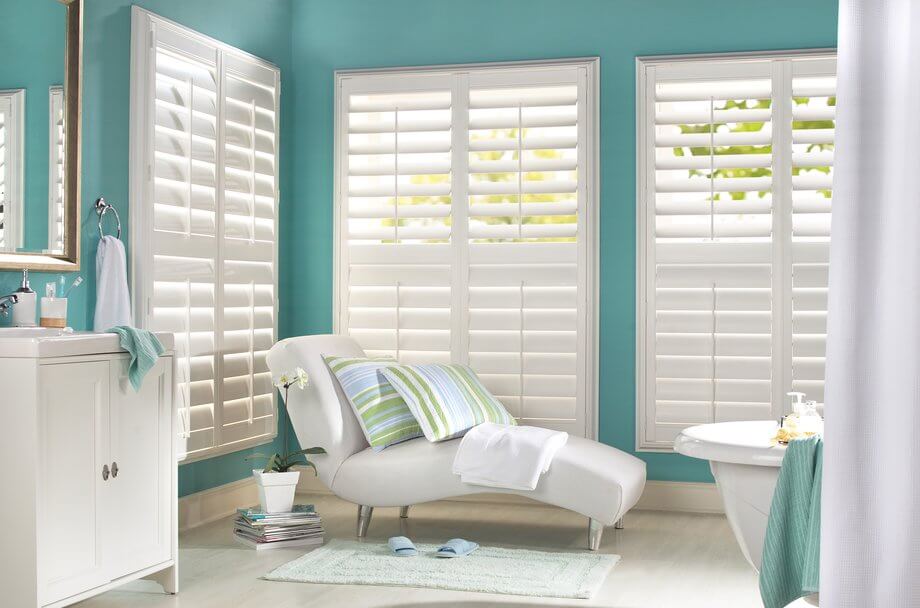
Unusually shaped windows are one of the most distinctive features in a home, adding character and giving a room a natural focal point. However, when it comes to installing window coverings, the non-standard shape can make it more difficult to buy something off-the-shelf.
For controlling light and privacy, bespoke shutters can be a great option. Since they’re made to measure, they can be designed specifically for your windows, for a very wide range of shapes and sizes. At Cambridge Blinds, our shutter range includes shaped options for arched, round and angled windows, with the final design assessed carefully for fit and everyday operation.
While shutters can be made for unusual window shapes, it doesn’t automatically mean they are the best choice. You also need to consider how the window opens, how much space is available around it, how easily you can reach the panels and what you actually want the covering to achieve. Sometimes shutters are the most practical and attractive option. In other situations, a custom-made blind may be easier to use and better value.
Which Window Shapes Can Work With Shutters?
Made-to-measure shutters provide much more flexibility than standard off-the-shelf solutions. Bay windows are a common example for these traditional window coverings. Instead of hanging large curtains across the front of the bay, shutters can be designed for individual sections, so the window shape is still visible.
We can also create shaped shutters for arched, round and angled windows. This can work particularly well when it’s an architectural feature, as the shutter can follow the outline rather than covering it with a standard rectangular blind or window. Very tall or wide windows can also suit shutters, although the way the panels are divided is more important as they get larger.
The shape is therefore only the starting point. We still need to make sure the finished shutter will operate practically in everyday use.
Examples of Shaped Windows
Made-to-measure shutters can suit many non-standard openings, including triangular and gable-end glazing, arches, circles or portholes, trapezoids, bays and unusually tall windows.
However, the fact that a shutter can be manufactured does not automatically mean it should be recommended. Narrow angles, curves and large panel sizes can affect louvre layout, panel divisions, hinges and which sections can move.
How Will the Shutter Panels Open?
This is one of the most important details to consider. Shutter panels need enough space to open, so we look at everything around the window, not just the glass. Radiators, furniture, deep sills and the shape of the recess can all influence how the panels should be configured.
The way the window itself opens is important too. If you use the window regularly for ventilation, you need to be able to reach the handle easily and open the window without the shutters becoming an inconvenience.
This is why we assess the whole opening before recommending a suitable solution. A shutter can look excellent when closed, but if the panel arrangement makes the window awkward to use every day, it’s not the right design.
What Works Best on a Bay Window?
Interior window shutters are particularly popular for bay windows, but there is still more than one way to approach them. The depth and shape of the bay influence how you divide the shutters, while how you use the room helps determine how much coverage you need.
If privacy is the main concern, particularly on a ground-floor window facing a road or neighbouring property, café-style shutters might be enough. These cover the lower half of the window while leaving the top open, providing privacy without limiting the amount of natural light entering above. We also offer full-height plantation shutters where you want more control across the entire window.
Neither approach is automatically better. We would rather understand what you’re trying to achieve before recommending how much of the bay should be covered.
What About Arched, Round or Angled Windows?
This is where bespoke window coverings can be particularly beneficial. A standard blind or curtain might hide part of an arched or angled window, while a shaped shutter can follow the architecture much more closely. This allows the window to remain a feature of the room while still giving you privacy and adjustable light control.
However, unusual shapes can affect how the shutter operates. As an opening becomes narrower towards an angle, or follows a curved line, there might be limitations on panel size, louvre arrangement or how individual sections move. This doesn’t make shutters unsuitable. It simply means we need to consider function as carefully as appearance.
If retaining the window’s shape is a priority, bespoke shutters can be an excellent choice. If your main concern is something different, such as operating a covering for a very high window remotely, we might recommend another solution.
Could Shutters Block Too Much Daylight?
This is worth thinking about, particularly in rooms that are already quite dark. Shutters let you adjust the louvres or open the panels completely, giving you good control over natural light. However, the frames, panels and louvres still take up some of the window opening. In a bright room with large windows, this can make very little practical difference. In a small room with limited daylight, it deserves careful consideration.
Café-style shutters can sometimes be useful because they leave the upper section of the glass completely open while providing privacy lower down. In other rooms, blind styles such as vision blinds, which let you manage incoming light and privacy, may be a better option.
We would rather discuss that before installation than recommend shutters purely because they can be made to fit the shape.
Are Shutters Practical on Hard-to-Reach Windows?
Shutters are manually operated, so accessibility is important. An arched or angled window at normal height might be straightforward to use, but the same window positioned high above a staircase can be very different. In this situation, a motorised blind might provide much easier day-to-day control.
Specialist motorised blind systems can suit certain non-standard shapes, including some triangular and trapezoidal glazing. The available operating direction and system depend on the geometry and product, so we assess each opening individually rather than making a universal promise. This means we don’t need to force shutters into a location where they would be difficult to reach. If a blind makes a high-level window easier to operate, that might be the better option.
What About Shutters on Doors?
Doors need slightly different consideration as they’re usually opened more often than a standard window. We need to consider how often the doors are used, how the shutters will move, and where the panels will sit when open.
For wider openings, tracked shutters can be a practical option because they’re designed to move across larger spaces rather than relying solely on conventional hinged panels. However, the shutter arrangement still needs to work with how you use the room. For large sliding or folding doors that are used regularly in warmer weather, a blind or screen system might sit more naturally alongside the doors.
So the more important question is whether you will find bespoke shutters convenient once they’re installed.
When is a Blind the Better Choice?
We often recommend a blind in several situations. Hard-to-reach glazing is one, and limited clearance around the window another. The budget is worth considering as well. Shutters are made-to-measure and can provide an attractive long-term solution, but they won’t always be the most cost-effective way to control light and privacy.
For a straightforward window where your main priority is simply controlling sunlight, a blind might do everything you need more simply. That doesn’t mean shutters aren’t worth the investment; it just means the additional cost should provide a genuine benefit.
We wouldn’t recommend plantation shutters purely because they’re the more premium option if a blind would work just as well for the room and your budget.
Choosing the Right Solution for an Unusual Shaped Window
At Cambridge Blinds, we can create bespoke shutters for a wide range of non-standard windows, including bays, arches, and angled glazing, offering much more flexibility than a standard window covering. But the shape itself should never be the only consideration.
We also look at how the window opens, whether you can reach it easily, the space available for the panels, how much daylight enters the room and what you want the covering to achieve. Sometimes shutters are exactly the right solution; in other situations, a bespoke or motorised blind might be simpler to operate, less intrusive or better value.
Our job is to recommend what genuinely works for the window, the room and your budget. If shutters are the best option, we will explain why and if a blind will do the job more simply and affordably, we will happily tell you that too. If you have an unusually shaped window, send Cambridge Blinds a photograph or arrange a survey. We can assess the entire opening and explain the practical options before you commit to a particular window covering.